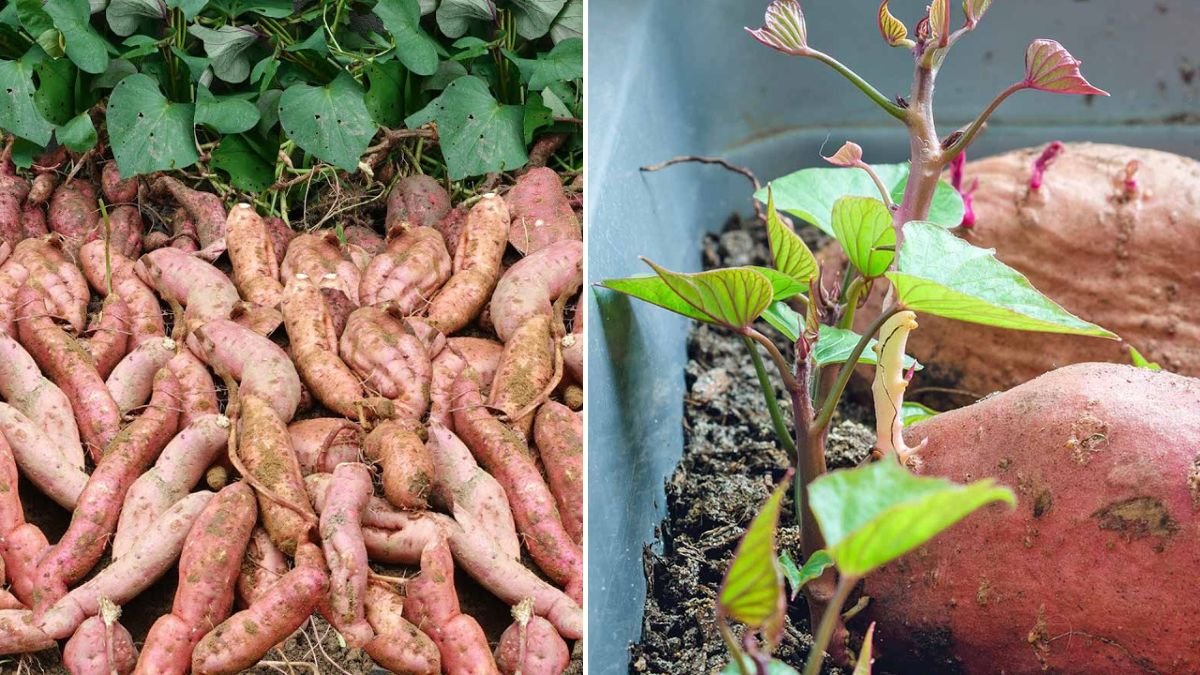
Why Sweet Potatoes Are Perfect for Low-Cost Growing
Sweet potatoes (Ipomoea batatas) are naturally resilient, making them an ideal crop for beginner gardeners or people with limited resources. Normally, sweet potatoes are grown from slips — small shoots sprouted from tubers — in soil. However, even without soil, you can start the process using a few household materials.
Here’s why sweet potatoes are ideal for low-cost cultivation:
- Minimal startup costs: You can start with leftover grocery store sweet potatoes.
- Easy propagation: Sweet potatoes sprout from tubers, giving you free slips to plant.
- High yield potential: One tuber can generate multiple slips, which grow into new plants.
- Nutrient-rich harvest: Sweet potatoes are high in fiber, vitamins A and C, and antioxidants. (spice.alibaba.com)
Even without soil or money, these characteristics allow almost anyone to start growing a crop with impressive results.
Step 1: Start Sprouting Sweet Potatoes
To begin, you need a sweet potato that hasn’t been treated with sprout inhibitors. Organic or untreated tubers work best. Here’s how to start:
- Choose a healthy tuber: Look for firm, unblemished sweet potatoes.
- Water rooting: Suspend half of the tuber in a jar of water using toothpicks so that the bottom touches the water. Place the jar in a warm, sunny area.
- Wait for slips: Within 7–14 days, sprouts (slips) and roots will emerge from the tuber.
Water propagation gives you the planting material without soil, allowing you to start your sweet potato garden with nearly zero cost. (gardening.alibaba.com)
Note: Tubers grown in water alone will not produce edible sweet potatoes; this method is just for generating slips that can later be planted in a medium.
Step 2: Harvest and Root the Slips
Once the slips are about 8–10 cm tall:
- Gently twist or cut the slips off the tuber.
- Place the slips in water or a damp medium such as coconut coir to encourage root growth.
- Wait a few days until the slips develop strong roots, ready for planting. (lifetips.alibaba.com)
At this point, your sweet potato slips are ready to move into a growing medium, even if you still don’t have traditional garden soil.
Step 3: Plant Slips in a Low-Cost Medium
While slips can start in water, tubers require a medium for storage and growth. There are low-cost options if you don’t have soil:
- Recycled containers or pots: Old buckets, bins, or trays work perfectly.
- Straw bales or wood chips: These can substitute for soil and provide structure.
- Raised beds or grow bags: If you have limited space, they create a compact growing area.
Place slips in the medium, making sure the roots have room to expand. Water regularly, and ensure good drainage to avoid rot. (spice.alibaba.com)
Step 4: Provide Light, Warmth, and Care
Sweet potatoes thrive in warm, sunny conditions. Outdoors, choose a sunny location; indoors, maximize natural light or use affordable grow lights. Keep the soil or medium consistently moist but avoid overwatering, as too much moisture can rot tubers. (groworganic.com)
Key care tips:
- Maintain warm temperatures: Sweet potatoes grow best in 24–30°C (75–86°F).
- Fertilize with compost or organic nutrients to encourage tuber development.
- Space slips to allow vines and roots to grow freely.
Step 5: Harvesting Sweet Potatoes
Sweet potatoes typically require 90–120 days from planting slips to harvest. Signs that tubers are ready include:
- Yellowing or drying of leaves and vines.
- Firm, plump tubers when gently dug from the medium.
Harvest carefully to avoid damaging the tubers. After harvest, some tubers can be kept for sprouting next season, continuing the low-cost cycle. (groworganic.com)
Common Myths About No-Soil Sweet Potato Growing
Myth 1: Tubers Will Grow in Water Alone
Water propagation produces slips and roots, but tubers require a medium to develop and store starches.
Myth 2: Any Sweet Potato Will Sprout
Some grocery sweet potatoes are treated to prevent sprouting. Untreated or organic tubers are ideal.
Myth 3: This Requires Expensive Equipment
Using jars, buckets, or recycled containers, along with kitchen scraps, is sufficient to start — no commercial equipment needed.
Tips to Maximize Yield
- Choose fast-growing varieties: Varieties like Beauregard or Jewel produce more tubers.
- Monitor water and nutrients: Balanced moisture and nutrients prevent stunted growth.
- Ensure sunlight or grow lights: At least 6–8 hours of bright light encourages tuber development.
- Avoid overcrowding: Give each slip space for roots and vines to expand. (gardening.alibaba.com)
Why This Method Works for Beginners
- Low or no startup cost: Start with grocery scraps and recycled containers.
- Accessible for all spaces: Indoor windowsills, balconies, or small patios work.
- Progressive method: Begin in water, move to low-cost media, and eventually harvest nutritious tubers.
- Educational: Perfect for learning propagation and hydroponic-like techniques.
Nutritional Benefits of Sweet Potatoes
Sweet potatoes are:
- High in fiber, aiding digestion
- Rich in vitamins A and C
- Contain antioxidants that reduce inflammation
- A versatile and filling staple for meals
Growing your own tubers ensures maximum freshness and nutrient retention.
Authoritative Sources
- Grow Organic — Sweet Potato Growing Guide: Tips on planting, care, and harvest. (groworganic.com)
- Spice Alibaba — Guide to Growing Sweet Potatoes from Tubers: Propagation without seeds. (spice.alibaba.com)
- Plants for Human Health Institute — Growing Sweet Potato Slips: Techniques for propagation. (stem.plantsforhumanhealth.ncsu.edu)
Final Thoughts
Growing sweet potatoes with no soil and almost no money is entirely achievable. By starting slips from kitchen scraps, rooting them in water, transitioning to an affordable medium, and providing proper care, anyone can harvest tons of nutritious tubers.
This method is beginner-friendly, space-efficient, and cost-effective — a perfect solution for urban growers, apartment dwellers, or anyone looking to grow their own food without the traditional garden setup.
With patience and the [FOCUS KEYWORD], you can turn humble kitchen scraps into a continuous supply of sweet potatoes, healthy meals, and even a potential small-scale profit.